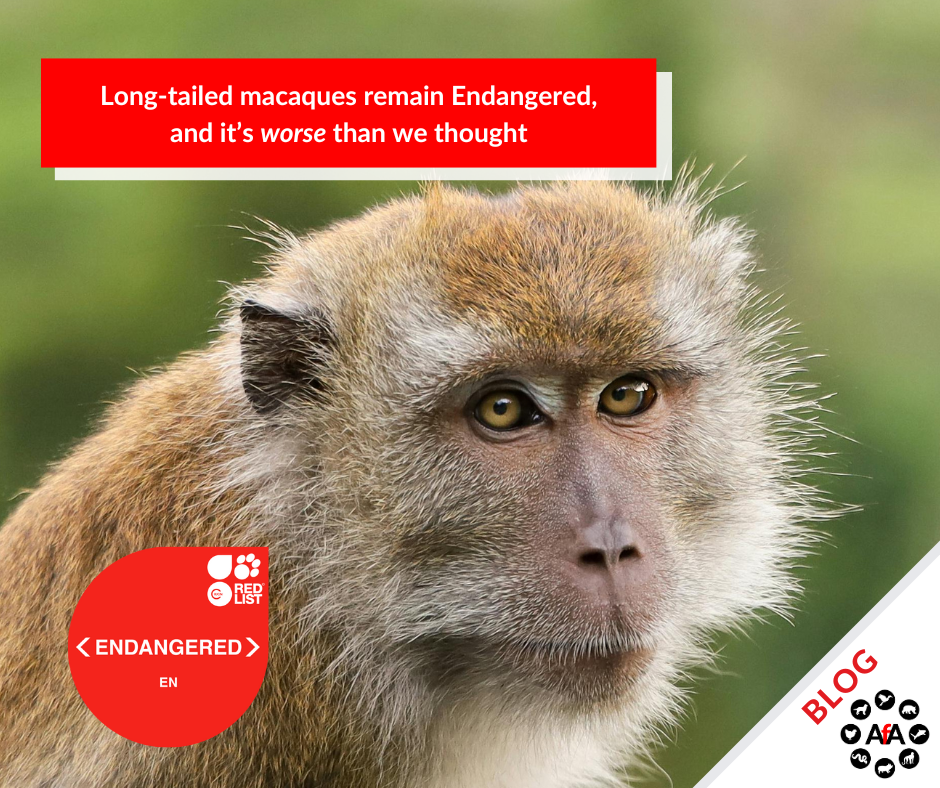
AfA Raises Concerns Over Macaque Non-Detriment Findings in Mauritius
Recent reporting in L’Express has highlighted growing international attention on the export of long-tailed macaques (Macaca fascicularis) from Mauritius for biomedical research and testing. The coverage reflects questions raised by global animal protection organisations regarding how these exports align with Mauritius’s obligations under the Convention on International Trade in Endangered Species of Wild Fauna and Flora (CITES).
In December 2025, the Asia for Animals Coalition, a global network of local and international animal protection and advocacy organisations, submitted a formal appeal to the Prime Minister of Mauritius seeking clarification and raising concerns about the use of Non-Detriment Findings (NDFs) for macaque exports. Under CITES, NDFs are required to ensure that international trade does not harm the survival of species in the wild.

Non-Detriment Findings are a core requirement under CITES, intended to ensure that international trade in listed species does not threaten their survival in the wild. AfA’s appeal highlights the importance of transparent, science-based assessments to support export decisions, particularly for species that are subject to high levels of international trade.
The coalition notes that long-tailed macaques have been listed on CITES Appendix II since 1977 and classified as Endangered on the IUCN Red List since 2022. In this context, AfA encourages clarity around how population data are collected, how sustainability is evaluated, and how welfare considerations are incorporated into NDF processes. “Clear, transparent, and science-based Non-Detriment Findings are essential to ensure that international trade does not place additional pressure on long-tailed macaque populations.”
AfA’s appeal is intended to support constructive dialogue with the Government of Mauritius and relevant authorities. The coalition recognises the importance of evidence-based decision-making and encourages open engagement to help strengthen confidence in wildlife trade governance.
As international attention on wildlife trade and zoonotic disease risk continues to grow, AfA notes that transparency and adherence to international frameworks such as CITES are increasingly important for both conservation and public trust.
The appeal was signed by Asia for Animals’ Core Member Organisations, with support from AfA’s Network Member Organisations worldwide. This reflects shared concern across the coalition regarding the long-term conservation and welfare implications of macaque trade. AfA welcomes continued dialogue with the Government of Mauritius and remains committed to supporting solutions that prioritise animal welfare, biodiversity conservation, and compliance with international obligations. The coalition hopes that this engagement will contribute to greater clarity and strengthened practices aligned with CITES principles.
Reference:
L’Express (Mauritius). Maurice sommé de s’expliquer par plusieurs organisations et coalitions internationales. Available at: https://lexpress.mu/s/maurice-somme-de-sexpliquer-par-plusieurs-organisations-et-coalitions-internationales-553365
Asia for Animals Coalition. Non-Detriment Findings for Macaca fascicularis exports. Submitted on 16 December 2025. Available at: https://www.asiaforanimals.com/appeal-letters