The Cat Rescue Scam That Ended in 15 Years Behind Bars, and What It Reveals About Online Animal Cruelty
Not every case of online animal cruelty leads to an investigation, prosecution, or the rescue of the animals involved. Behind the countless videos that pass through our feeds, opportunities for intervention can be missed. But this case shows what can happen when people recognise red flags in animal content, bring evidence to authorities, and authorities take action using appropriate existing legal frameworks.
Cruelty disguised as cancer care
A fraudulent fundraising scheme involving injured cats supposedly needing cancer treatment ended with Rodney Travis Jr. receiving 15 years of active imprisonment and US$25,000 in fines. He was also convicted of computer fraud. According to prosecutors, this was the longest animal-cruelty sentence ever imposed in Virginia, United States.
Travis obtained cats from two identified rescue organisations using false identities. He then abused the animals and posted videos showing their condition on social media, falsely claiming that they had cancer and needed donations for treatment. Veterinary and adoption records contradicted these claims, while investigators uncovered fabricated veterinary bills and signs of staged medical treatment. Prosecutors said the animal-related fundraising accounts collected at least US$407,111.
Around seven months after his arrest, on 23 September 2026, Travis pleaded guilty in Henrico County. He had separately pleaded guilty in neighbouring Chesterfield County the previous day, with sentencing there reported as pending in December. Investigators linked three fundraising campaigns to footage filmed at three Henrico hotels and also found injured cats and evidence of abuse at his Chesterfield residence. The offending involved locations in both counties, resulting in separate proceedings.
The consequences extend beyond imprisonment. Travis has been added to Henrico County’s Animal Cruelty Registry and is prohibited from intentionally contacting animals for life. His plea agreement restricts online fundraising, requires disclosure of his social media accounts and provides for five years of supervised probation following release.
This case demonstrates that animal cruelty offences can attract a substantial sentence reflecting the severity of the harm inflicted, while fraud convictions recognise an additional dimension of the offending. His 15-year active prison term came from the felony animal-cruelty counts. He also received prison sentences for computer fraud, but these were later suspended. The case also illustrates how animal cruelty can be intertwined with other unlawful conduct - in this instance, financial deception - harming both animals and donors and reinforcing the need for public awareness.

Public vigilance and a rapid response
Concerns about the accounts were raised by people ranging from local rescue networks to overseas viewers. Citizen investigators documented and tracked the material and alerted Chesterfield police, who passed the concerns to the Virginia Attorney General’s Animal Law Unit.
On 12 February 2026, the Attorney General’s Office and Chesterfield animal-control officers notified Henrico Police. Investigators immediately began work and, with community assistance and cooperation between agencies, identified where the content was being produced.
This quick response deserves attention. Information moved between jurisdictions, agencies worked together, and members of the public and rescue organisations helped bring concerns to authorities. Prosecutors said Travis was in custody within approximately 24 hours of the matter reaching them.
Different countries, a similar concern
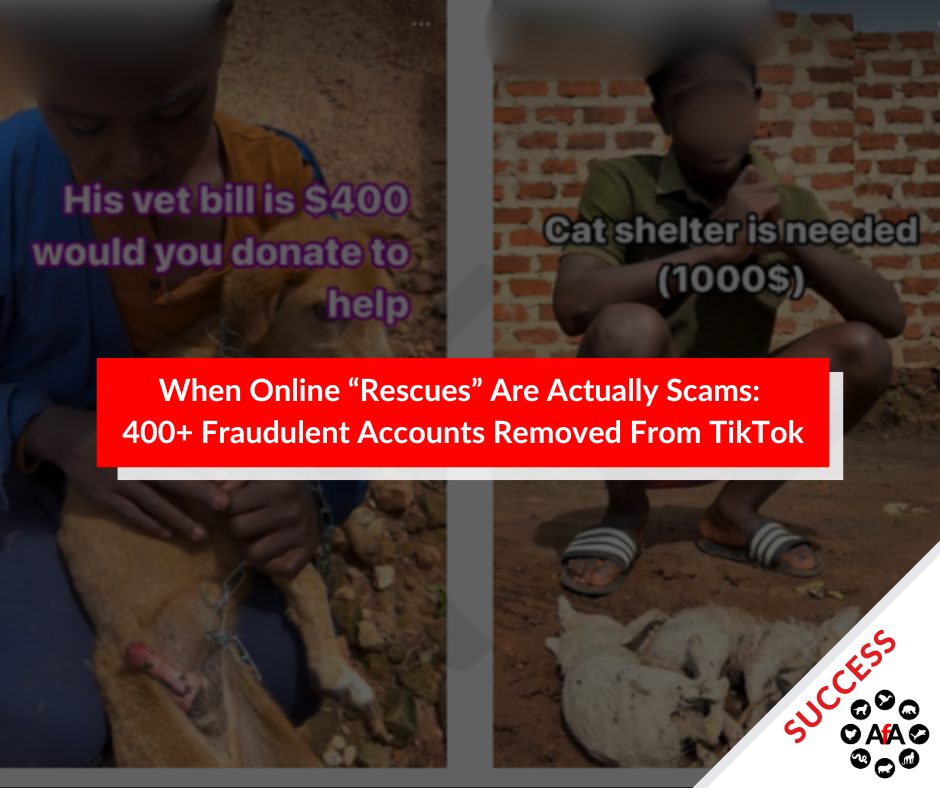
The Virginia case echoes concerns exposed by a BBC investigation into sham animal-rescue fundraising in Mityana, Uganda. The investigation described animals being used in online appeals to overseas donors, including operations in which different content creators paid to film at the same shelter.
Different operations, different countries, but a shared concern: animal suffering can be presented as an appeal for help while people collect money through deception.
These cases highlight a difficult detection gap. An image of an injured animal accompanied by a heartbreaking caption does not, by itself, establish whether the uploader is providing genuine care or exploiting the animal’s suffering. What appears to be a rescue appeal may conceal abuse or deception.
Recognising the difference may require looking beyond a single post. SMACC’s A.R.C. guidance: Authenticity, Reality Check and Creation - encourages viewers to examine an account’s posting history and check whether follow-up updates on the animals are provided. These indicators can help users assess what they are seeing and could also inform platforms’ reviews of suspected animal abuse and deception.

The sources reviewed do not establish whether platforms removed Travis’s content before or after his arrest, or whether any removals resulted from automated detection or public reports. Nevertheless, this case highlights the need for platforms to strengthen their detection of animal cruelty and recognise warning signs of associated violations. This should include examining animal-related donation appeals and working with animal-welfare professionals to identify exploitation disguised as care. Animal cruelty and suspected fraud should be examined together when the evidence points to both. The victims of these schemes include animals and the social-media users whose compassion is exploited.
The challenge is not simply detecting an injured animal, but establishing whether the person asking for help is caring for that animal, or exploiting the suffering they claim to relieve.
Report the content
Every report submitted to a platform can signal potentially harmful content and help inform its response. Even when a report does not lead to removal, it can draw attention to concerns that warrant further review. Public reporting is therefore an important way you can contribute.
Be aware. Do not engage with the content. Report it!
Views, shares, comments, and reactions can increase the reach of harmful content. Greater visibility can create further opportunities to exploit animals and solicit donations.
To help end this cruelty and protect animals, make a donation today.
References
WTVR/CBS 6. He adopted cats from shelters and abused them in hotel rooms for money. Now he’s going to prison. 23 September 2026. Read article.
Courthouse News Service. Fraudster who tortured cats gets Virginia’s harshest-ever animal abuse penalty. Read article.
Henrico Citizen. Chesterfield man sentenced to 15 years in Henrico animal cruelty, fraud case. 23 September 2026. Read article.
Circuit Court of Henrico County. Commonwealth of Virginia v. Rodney Travis Jr.: Plea Agreement. Reproduced by Courthouse News Service. Read court document.
Henrico County. Henrico Animal Cruelty Registry. View registry.
Virginia General Assembly. Code of Virginia § 19.2-306: Revocation of suspension of sentence and probation. Read provision.
Henrico Police. Henrico Police Make Arrest in Animal Cruelty and Fraud Scam. 15 February 2026. Read official release.
BBC Africa Eye. BBC uncovers the Ugandan scammers abusing dogs to elicit donations from animal lovers. 4 May 2026. Reproduced by The Star. Read investigation.
Social Media Animal Cruelty Coalition. Fake rescue content: All you need to know. Includes A.R.C. indicators. Read guidance.
Chakales, S. (2026, September 23). Man receives longest sentence ever for animal abuse in Virginia’s history. 12 On Your Side (WWBT)